Category Archives: Society

Lives In Isolation: Reflections on the Coronavirus

With all the Coronavirus hub-bub these days everywhere, I was recently asked about a social media post citing the Bible verse from 2 Chronicles where God punished the sins of Israel through plagues, locusts, etc. These calamities were all in an attempt to bring God’s people to repentance. No, I don’t buy the idea that it’s God’s plan to use the Coronavirus as a catalyst for worldwide repentance. Just in the same way that I don’t believe it is God’s will for us to watch Cancer ravish the lives of our loved ones.

We do live in a world that is detached from God, a “war-zone” if you will.  It is a world of physical disease and diseases of the soul such as greed.  In this war-zone, we are now in the midst of another pandemic, the likes of which seems to emerge once every one hundred years or so.  So rather than view the current pandemic as a global call to repent, I see it rather as another symptom resulting from our detachment from God.  The virus is a part of this world that is not of our Lord, but rather a byproduct of our fallen condition.   For inspiration during these challenging times, I opt to examine other people throughout our collective human experience that have lived lives in isolation.

In all of this I like to remember the historical and biblical characters who lived their lives in much worse isolation.   As my wife was cleaning her closet on day two, she came across the “Diary of Anne Frank.”  What an appropriate person to reexamine during our current time period.   Anne was 13 when she was forced into hiding.  Our situation pales in comparison.  She couldn’t go outside, or open the window for fresh air.  She often had to remain silent for periods of time.  Yet she endured and even found moments of happiness and some satisfaction in an unreasonable living situation.

On to the Bible. Noah, now there is a fella with some cramped living arrangements. Not only was he limited to interactions with a small group of family members, he was sharing the space with a whole bunch of animals. Basically, this lucky fellow found himself in a floating zoo for 40 days and 40 nights. The smell must have been magnificent.

Just when you thought it couldn’t get any worse than Noah, there is Jonah.  Yes, Jonah’s duration was much shorter than Noah and Anne Frank (3 days and 3 nights) But how uncomfortable must he have been to be in the mouth of a “big fish?”  If I had to pick one of these, I don’t which one I would choose to suffer through, but I will say I would rather endure our current dilemma, no doubt about it.

Finally there is Jesus.  He went to the desert in isolation really only accompanied by Satan, not exactly great company.   Our Lord spent 40 days without food or human contact.  So now, not only was he not talking to anyone, Satan was there to tempt Jesus while he was physically weak, not once but three times.  The temptations seem to resemble a morbid type of teasing….starving, well here is some food to alleviate your suffering.  Only the Son of God could suffer and overcome such tremendous isolation and temptation.

Our current crisis will pass, it is not unique to the human experience.  For strength I will continue to consider those before me that have traveled a similar road, while praying to Our Lord Jesus, and of course repenting every day just in case 🙂

-Got any other examples?  Feel free to comment….

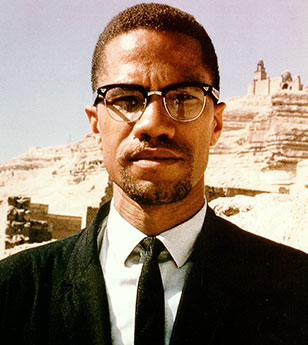
Malcolm X


Malcolm X


February is Black History Month, and I would be remiss if I didn’t take the opportunity to publicly acknowledge my all-time favorite civil rights leader. I first got to know who Malcolm X was through Alex Haley’s biography, and later through the film adaptation directed by Spike Lee. As a younger, testosterone-fueled football player, I found myself identifying more with Malcolm’s aggressive approach to civil rights, especially in contrast to the peaceful Satyagraha methods championed by Dr. Martin Luther King Jr.

But what I truly came to appreciate was the transformation of Malcolm X. I’ve always been drawn to stories of personal growth and the evolution of human character—and that’s exactly what you see in Malcolm’s life. His persona changed significantly over time. He was a burglar, then a prisoner, then a devout Muslim who preached separatism, and finally someone who came to see the beauty in all races and began preaching racial reconciliation.

Too often, we remember only the fiery rhetoric of Malcolm X and forget that his message had evolved by the time of his tragic assassination.

Malcolm converted to Islam during his time in prison, and upon his release, quickly rose through the ranks to become a leader in the Nation of Islam here in the United States. His first transformation was from a burglar to a devout Muslim leader who took an extreme stance on civil rights. His second transformation came during his pilgrimage to Mecca, where he prayed alongside Muslims of many races and realized that racial harmony was indeed possible.

The human character is a fascinating thing. We must remember that we can grow, change, and become enlightened as we continue through life, learning from those around us. This is what some psychologists refer to as a “growth mindset.” That’s exactly what happened to Malcolm. His story is a powerful testimony to the transformative power of love—something that can change all of us for the better.

So during the month of February, I choose to remember Malcolm X not only for his passionate voice and powerful rhetoric, but also for the transformation of his spirit, which ultimately led him to believe that racial reconciliation was possible.

Identity Crisis: Reflections and Recommendations for the Republican Party (pre-MAGA meandering)

Reflections on the Republican Party’s Coalition and Future Direction

In our two-party system, both major parties strive to build a broad coalition of voters to carry them to victory in local, state, and national elections. The Republican Party dominated not only my hometown and state growing up but much of the surrounding region as well. While political strategists on both sides may advocate for their parties to shift further left or right, I’d like to see the Republican Party preserve the ideals I grew up with while moving more toward the center. I’m not a political scientist—this is simply a personal reflection on the GOP’s constituent base, with a few bold policy suggestions for the future.

I grew up in a western state nestled in the beautiful Rocky Mountains. The region fostered a culture of independence. We started driving at a young age—15 or 16—and with that freedom came road trips, camping excursions, and outdoor adventures, often without adult supervision. This spirit of independence also shaped our politics. The Republican Party, in particular, nurtured that mindset by championing land and gun rights.

In many western states, zoning and gun laws are notably relaxed. For example, I legally purchased my first firearm—a .45 caliber pistol—at a store called Rocky Mountain Sports and Liquor, which even featured a drive-thru window. That anecdote alone says a lot about local regulations and cultural norms.

People in the West often feel a deep connection to the land—not just as a sacred and beautiful landscape, but as privately owned terrain that must be protected from federal overreach. The GOP’s defense of private property rights, low taxes, and local control resonated strongly. Many western landowners have long contested the federal government’s control of land—often 25% to 65% of a state’s total area. In many ways, the federal government functions like a landlord, a dynamic that creates tension. The GOP built support by defending gun rights and representing the “independent” landowner against what was perceived as a bloated, intrusive federal government. Agencies like the EPA, Department of the Interior, Department of Agriculture, and ATF became convenient targets for blame—sometimes rightly so. Consider the federal overreach in cases like Ruby Ridge or Waco, Texas.

Another key pillar of the GOP base has been religious social conservatives. In my home state, this group largely comprised Evangelicals and Mormons. Evangelicals, in particular, became a cornerstone of the national Republican base, drawn by the party’s strong stances on issues like abortion and same-sex marriage. This formula contributed to Republican dominance in the West and helped elect George W. Bush and his running mate, Dick Cheney of Wyoming. Bush, a born-again Christian, embodied the religious appeal, while Cheney personified western values.

The strength of the Evangelical vote was evident again in 2004. Karl Rove, Bush’s campaign strategist, made a deliberate effort to mobilize these voters—not just to the polls, but into campaign operations as volunteers. Their overwhelming support played a major role in Bush’s reelection.

Rounding out the Republican base is a pro-business, economically conservative faction—Wall Street advocates, millionaires, small business owners, and financially conscientious middle-class voters. These are the Republicans I’ve come to know while living on the East Coast. In contrast to many social conservatives, this group tends to be more socially libertarian. They may support same-sex marriage, for instance, as long as the couple pays taxes—and preferably low ones. The Bush/Cheney ticket and even Trump’s campaign appealed to these voters by emphasizing tax cuts and deregulation. Additionally, the national GOP base includes Libertarian-leaning individuals, who maintain a particularly strong presence in the West.

Now that I’ve outlined what I see as the key factions within the GOP, I believe the time has come for the party to reevaluate its platform. Moving forward, the GOP would be wise to prioritize equal rights while continuing to protect the religious freedoms of churches and other faith-based institutions. Though this may seem like a subtle shift, it would represent a bold break from recent party orthodoxy and would likely alienate part of the traditional base.

First and foremost, the GOP should stop opposing same-sex marriage and gay adoption. Instead, it should embrace a platform of equal legal rights. From an economically conservative standpoint, promoting marriage—regardless of the couple’s gender—can lead to more financially stable families. Stable families are less dependent on state assistance, and larger adoption pools mean fewer children relying on government welfare. Sociologically, the family remains the cornerstone of a stable society. If the GOP continues to champion the family unit, it should not seek to narrowly define what constitutes a family. Admittedly, this stance would be controversial among Evangelicals, but the greater challenge for socially conservative voters lies ahead: protecting their right to practice their faith freely.

The GOP already supports religious liberty and the protection of nonprofit status for faith-based institutions. The party rightly recognizes the value these organizations bring to their communities—even when they object to certain federal mandates. The party’s defense of religious freedom must remain central to its platform. Doing so will help retain the support of Evangelicals, Catholics, Mormons, and others.

Today’s pressing cultural conflict is no longer same-sex marriage or abortion—those battles are largely settled in the legal and social arenas. The current front is about the rights of religious institutions. For example, Catholic hospitals should not be forced to provide abortions or birth control if doing so violates their religious beliefs. Denying them federal funding on that basis would harm the communities they serve. Protecting their autonomy is a critical issue that resonates with a broad swath of religious voters.

Ultimately, the Republican Party should not abandon the culture war—but rather, it should redefine it. Roe v. Wade and Obergefell v. Hodges are settled law. Our culture is becoming increasingly liberal, and the GOP must evolve in response. The party should remain committed to smaller government and personal liberty—liberty and equality for all. A truly small government doesn’t belong in your bedroom.

If the GOP clings to an outdated platform, it risks both political irrelevance and being remembered as a party on the wrong side of history.


Further Reading:

Note: The views expressed in this blog do not necessarily reflect my personal or religious beliefs. They are presented here as reflections on the Republican Party’s current coalition and suggestions for its political future.


Let me know if you’d like this reformatted into a blog post or visual piece for publication or social sharing.

If everyone is super…then no one is.

The Incredibles

Having a younger daughter basically means my wife and I have seen every animated cartoon movie known to man. Honestly, we even find ourselves quoting animated movie lines during adult conversations—which can be a little embarrassing. Of course, I’m about to quote yet another cartoon movie, but only because the line really resonated with me.

The movie was The Incredibles, and the line came during a scene where the villain—like all villains do—took the time to explain his evil plan to Mr. Incredible. His scheme was to make everyone a “superhero” using his gadgets and gizmos, and in doing so, he said:
“When everyone’s super… no one will be.”

I’d like to connect that animated gem to something both personal and professional.

My daughter used to be in a baton twirling group. Yes, I’ll admit, I was surprised to learn that baton twirling is still a thing. But apparently, it is—and it even comes with the possibility of earning scholarship money for college. Who knew?

I remember her big competition one year. The parents were all gathered with their camera phones, the girls were in glitzy outfits, and loud music cued the routines on the gym floor. Then, off in the corner, there it was: a big table proudly supporting hundreds of trophies. And at the end of the day, each participant, of course, received a gigantic trophy simply for being part of the program.

While being part of a program is great, what we should really be celebrating is being an exceptional part of the program. Participation trophies, though well-meaning in their attempt to foster self-esteem, can sometimes have the opposite effect. Even kids can sense when an award doesn’t represent genuine achievement.

Which brings me to self-esteem.

All of us—whether parents, guardians, grandparents, teachers, or mentors—want our children to grow into confident individuals who believe in themselves and their abilities. But what we really need to build in them is what I call authentic confidence, because self-esteem can be fleeting.

Even as adults, we have days when we feel on top of our game—we have the answers, others seek our input, and everything flows. Then there are days when we feel drained or unsure if we even deserve our title or position, as if we’ve somehow lost the ability to move forward. That’s because self-esteem fluctuates—it can shift by the day, or even by the hour.

But authentic confidence is different. It doesn’t fade because it’s built on integrity, honesty, and hard work. It’s earned. And because it’s earned, it sticks with us—even on the days when our self-esteem wavers. With perseverance and character, we can weather the natural ups and downs of how we feel about ourselves.

When we choose to recognize only the average—or reward everyone the same just for participating—we unintentionally do a disservice to those who invested extra time, worked harder, or are exceptionally gifted. Don’t get me wrong—participating in sports, clubs, and other activities is valuable and should absolutely be acknowledged. But not everyone is the club president, the MVP, or on the Honor Roll.

Because after all, if everyone is super… then no one is.